


Tulips and daffodils top the list of most popular and loved spring flowers! They are known and loved by gardeners. However, they are also adored by people who don’t garden but enjoy the beauty these flowers display in spring! Their popularity in the landscape will translate well to fresh-cut flowers sold at the market. This means YES, you can make money selling tulip and daffodil flowers at flower and farmer’s markets!
If your growing experience is with summer flowers like gladiolus, growing daffodils and tulips for spring is a great way to extend your flower-selling season. Growing bulk tulips and bulk daffodils for sale in spring will build and expand your fresh flower market business!
How to Make Money Selling Tulip and Daffodil Flowers at Markets
Stepping outside your comfort zone of growing what you know can be scary. But, there is no need to worry. If you have had success with summer crops like gladiolus and zinnias, you will love growing spring flowers like tulips and daffodils. They require less water, which is a huge bonus when growing flowers on a large scale for the market. Once planted in the fall, they are dormant for several months in winter. This means months of waiting, yet, it does not require any extra work to grow a healthy crop of tulip or daffodil blooms while they are dormant.
Cost and Saleability
When purchasing wholesale tulip bulbs for cut flower use in a market the cost per bulb averages to around .35 per bulb. Some varieties may be less or more depending on how fancy or common 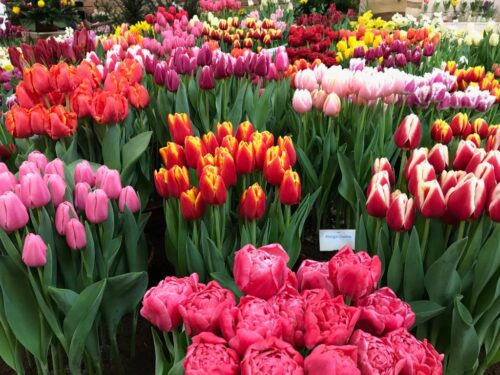 they are. Fancier tulips, such as Parrot Tulips or Fringed Tulips may have a higher cost per bulb. However, the cut flowers produced by these bulbs can be sold for more due to their unique appearance. Fresh tulip stems can sell for $1-$3 per stem depending on your market and the tulips you grow.
Daffodil bulbs for planting for cut flower growing typically cost $.30-.50 per bulb. Fancier and hard-to-get varieties will sell on the higher end. Mixed Daffodils are the most affordable bulbs to purchase for cut flower sales–they are also one of the most popular choices from consumers. Fresh daffodil stems can sell for $1-$3 per stem at the farmers market.
How much fresh-cut daffodils and tulips sell for at the market will vary based on several factors. Market location and customer base largely dictate how much fresh-cut flowers can be sold. Therefore, it is best to base your pricing on your local market factors.
Best Places to Make Money Selling Tulip and Daffodil Flowers
If you’re an established vendor at a local market that market would be the first place to consider selling tulip and daffodil flowers. Depending on your location some markets may not be open until later in spring. If your market isn’t open during early and mid-spring there are plenty of other options for selling tulip and daffodil flowers successfully!
Indoor Markets, Craft Fairs, Art Fairs and Festivals
Research indoor farmer’s and maker’s markets in your area. With the increasing popularity of handmade and locally grown products, markets are expanding to indoor venues to accommodate vendors in all types of weather conditions. Think outside of the market box, and look into craft fairs, art fairs, music festivals, and community festivals.
Expand Beyond the Market and Partner with Small Business Owners
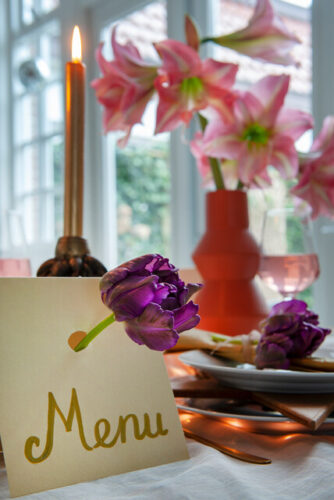 Expand beyond the market and reach out to locally owned restaurants that dress their tables with flower bouquets. Working with a realtor in your area to sell bouquets of fresh-cut daffodils and tulips. They can be displayed at open houses for the properties they are selling. In real estate sales, the little extra touches like fresh flowers can go a long way in the sale of a home.
Sell Fresh Flowers Online
For the tech-savvy flower growers selling online through a small website or Facebook marketplace is another way to expand your selling territory. Post in Facebook groups that are local to your area to avoid shipping and arrange for customers to pick up the bouquets directly from your location. With digital payment like Venmo and PayPal the customers can pay ahead of time and pick the flowers up from a designated location at their convenience.
Flower Stand Sales
Lastly setting up a flower stand on your property is another option for selling fresh tulip and daffodil flowers in spring. This takes some trust as often these flower stands are set up as an on-your-honor system where no one is stationed at the stand for sales. Often a bin or envelope is placed in the stand where patrons put their money and then select the bouquet they like best.
Buying and Planting Bulk Tulip and Daffodil Bulbs for Fresh Cut Flower Market Sales
When to buy tulip and daffodil bulbs?
Selling flowers at a farmers market or flower stand inevitably takes planning. Plan for planting reasons as well as allocation of the space you have to grow bulbs. Tulip and daffodil bulbs can be purchased well ahead of the planting season. Typically they are available to pre-order during the spring and summer months, as well as during the fall planting season. Once the summer flower growing season ends, start planning for the next crop by purchasing tulip and daffodil bulbs.
Planting Time and Growing Conditions for Tulips and Daffodils
Tulip and daffodil bulbs must be planted in the fall months before the ground freezes for winter. The best time to plant is when the daytime temperatures are in the 60’s or lower from September through December. In addition to planting tulips and daffodils at the right time of the year, it is also important to plant in the right hardiness zones. 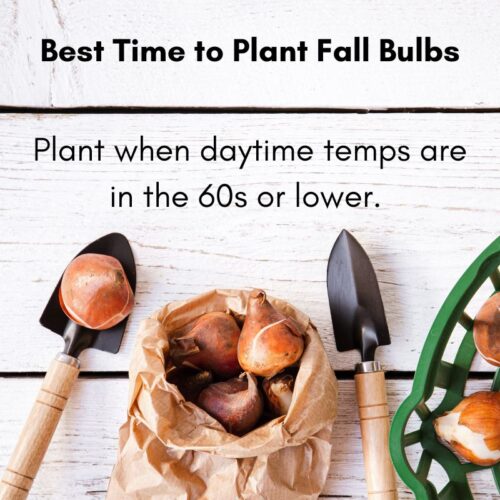
Tulips require cold temperatures to produce a flower bud. Therefore, they need 12-16 weeks of consistent temperatures below 50 degrees during the day to produce a flower in the spring. Daffodils don’t need as much cold to produce flowers, however, they do need several weeks of cold temperatures in the 50s in winter for consistent flowers.
Tulips grow best in hardiness zones 3-7. They also grow well in some of hardiness zone 8 in places like the Pacific Northwest with the cool winter temperatures they need. Daffodils grow best in hardiness zones 3-8.
Tulip and daffodil bulbs both require soil that drains well and do not tolerate wet feet. Plant these bulbs in loose soil or compost. Add bone meal when planting to ensure strong and healthy stems and blooms. When the leaves first appear in the spring add a slow-release fertilizer to the base to encourage strong blooms.
For more tulip and daffodil planting tips check out our Beginners Guide to Gardening with Tulips and Beginners Guide to Gardening with Daffodils.
Planting Tulips and Daffodils for Market Sale
When planting tulips and daffodils in the garden it is prudent to follow the recommended spacing of 4-6″ per bulb. This helps to promote the bulb’s return in upcoming seasons. When growing tulips and daffodils for market sale the bulbs can be planted much closer together. Nearly touching is ok, as long as there is a small amount of space between bulbs. These bulbs will only be used for this growing season for the market, therefore, it is perfectly ok if they are planted closer together. Planting the bulbs close together encourages the stems to grow tall, as they compete for sunlight. Tall stems are important for the best fresh-cut flowers to be sold at the market or farm stand.
The best way to plant tulip and daffodil bulbs for market growing involves digging a trench. The trench can be dug in rows about 12″ wide. Place the bulbs in the trench where the bulbs are as close together as the space in an egg carton. The bulbs should be planted 6-8″ deep for the best results and longest stems.
After the bulbs are in the trench cover them with soil. Water the planting area once after the initial planting. Beyond the initial planting additional water generally is not required or suggested, as they are dormant. Rain and snow from nature is ok, and generally will not harm the bulbs as long as the soil drains well.
Best Daffodils for Cut Flower Use
Daffodils bloom in shades of yellow, white, orange, peach, and pink. 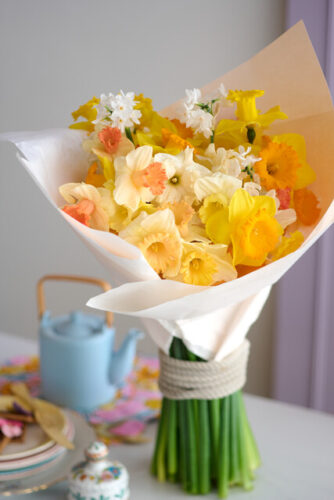 Their flower size and shape vary, with double daffodils having frilly, large double petaled blooms. Miniature daffodils look adorable in bud vases and are quite charming. Traditional large cupped daffodils like Dutch Master Daffodils are a winner every time, as they are the recognized bloom as the beacon of spring. Mixed daffodils sell well in the market with their carefree assortment of colors and flower shapes.
Best Tulips for Cut Flower Use
When deciding what types of tulips to use for selling at the market there are several factors to consider. First, tulips that grow tall with long stems are best for cut flowers. Either to be sold as individual flowers or mixed into a bouquet. Growers in areas with mild winters will want to use tulips with tall stems like Darwin Hybrids and Single Late Tulips.
Second, color choice should be considered. Do your existing customers have certain colors or pallets they gravitate toward? If so consider using tulips in that color assortment. Classic colors of tulips like red and yellow are always a safe bet if you are unsure where to start.
Third, should you stick with traditional flowers or go for a bold unique choice? This again will depend on your existing customer base and what they prefer. If you are new to this and don’t have an existing customer base starting with mixed tulips, and a few more exotic varieties will be a good way to gauge which are most popular.
Harvesting Tulip and Daffodil Flowers for Fresh Flower Sales
Tulips and daffodils for selling at the market will be harvested during late winter through mid-spring depending on what hardiness zone they are grown in. Warm and temperate climates should plan to harvest as early as late February through mid-April. Cold climates can generally expect the harvest to begin late March through mid-May. Each winter and spring season will vary, therefore the exact weeks will not be the same. If the tulips and daffodils can be grown in a controlled environment such as a greenhouse or unheated hoop house the harvest time predictability will be more reliable.
Tips for Harvesting Success
To ensure the flowers stay fresh for market sales there are a few guidelines that will help you succeed. 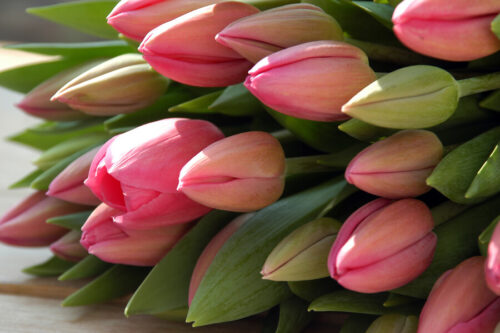 First, harvest the flowers when the bulbs are not yet open but are showing about 50% color. The color can be seen on the outside of the tightly closed bud. Once the bud starts to open the flowers will not last nearly as long, and may not be in condition to sell at the market.
Second, lift the entire bulb and stem from the ground when harvesting. Use a large garden fork to carefully dig and lift under the entire bulb or groupings of bulbs. Since re-using these bulbs is not suggested there is great benefit in harvesting the flower with the bulb attached when harvesting the flowers for market. Harvest the entire bulb and store them in a cooler. The flowers will be useful for sale for up to one month when stored in a refrigerated environment. Lastly, by removing the entire bulb the area the tulips and daffodils were planted in will be cleared for the next crop such as gladiolus that is to be planted there.
Third, tulips and daffodils are cold weather-tolerant flowers. However, once the buds are open and nearing ready for harvest they should be protected from late-season frost. If a hard frost is predicted near the time of harvest cover the tulips or daffodils with a frost blanket to protect the buds from damage.
Storing Harvested Tulip and Daffodil Flowers
Access to refrigeration for storing the tulip and daffodil flowers is the best way to store the flowers. However, if refrigeration is not an option, the fresh flowers can be stored in a cool location such as a cellar, unheated garage, or basement. After harvest wrap the stems and bulbs in newspaper or brown kraft paper. Store the flowers wrapped tightly in an upright position in a bucket of water. If the flowers are not refrigerated they should stay in good condition for up to two days. If the flowers are in a refrigerated location with bulbs attached they can last up to one month.
Yes! You CAN Make Money Selling Tulip and Daffodil Flowers
If you have growing experience already there is no need to hesitate when it comes to growing tulip and daffodil flowers. They can even be grown with other spring-cut flowers like lily of the valley, allium, iris, and peonies. If mixed bouquets are something you offer, adding tulips and daffodils to the mix is a must. Nearly everyone can identify a tulip or daffodil flower, therefore, these popular and nostalgic blooms will charm marketgoers. With the diversity in locations to sell tulips and daffodil flowers, they are an excellent way to expand your market, and your customer base and grow your business!