Entries tagged with “Summer Bulbs”.


Did I Miss My Chance to Plant Bulbs?

Lilies are one of the only winter hardy spring planted bulbs and are also extremely gorgeous!

Lilies are one of the only winter hardy spring planted bulbs and are also extremely gorgeous!

I’ve gotten several questions regarding tulips and daffodils from novice gardeners, wondering if they’re “too late” to plant these bulbs. My answer to these good-intentioned diggers in the dirt is yes. Unfortunately, these fall-planted bulbs need to be planted at the proper time in order to bloom correctly in the spring. This is why some of you may be having a difficult time finding these types of bulbs (daffodils, tulips, hyacinth, crocus, iris, and allium to name a few).

But do not despair! You can still jump on the bulb bandwagon! Did you know that there are actually bulbs which are meant to be planted in the springtime

The 'Postman Joyner' Caladium has striking red centers to its leaves.

The 'Postman Joyner' Caladium has striking red centers to its leaves.

for a summer bloom? Many people have heard of dahlias, canna lilies, calla lilies, and gladiolus, but not as many have grown them. These bulbs add great spalshes of color to your gardens long into the growing season and most of them make GREAT CUTFLOWERS! What could be better than going out into your own garden on a summer day and picking yourself a bouquet of fresh flowers which you grew yourself!

Since these bulbs are much less familiar than tulips, daffodils, and hyacinth, I thought I’d give you a quick overview of the types available and how they are grown:

  • Caladiums - Caladiums are wonderfully textured plants, grown primarily for their foliage. The leaves of this particular plant range in color from white to pink to red to different hues of green. These bulbs are sold as tubers and are planted just below the ground surface in partial to full shade areas. They will begin growing the same year they are planted and will put on their amazing foliage display from summer until frost. Caladiums are hardy from Zones 9 to 11. Many gardeners in more northern zones still grow Caladiums; they are either treated as an annual or are dug up in fall and replanted in spring.
  • Calla LiliesCalla Lilies are one of the most popular flowers for fresh flower arrangements and are often seen at weddings. Their elegant shape and varying heights make them
    Calla Lilies make an elegant statement in the garden!

    Calla Lilies make an elegant statement in the garden!

    a nice addition to the garden. These bulbs are sold as tuberous rhizomes and are to be planted just below the soil surface in full to partial sun areas. They will begin to grow and bloom the first year in mid-summer. Calla Lilies are hardy from Zones 8-10 and Zone 7 with winter protection. Calla Lilies can be grown in northern zones as annuals or dug up in fall to overwinter in a cool, dry place.

  • Canna Lilies - Canna Lilies are grown for their great height, colorful flowers, and showy foliage. These lilies add a tropical feel to any landscape which make them nice for plantings near a patio and/or pool. These bulbs are sold as rhizomes and are planted just below the soil surface in areas receiving full sun. They will begin to grow and bloom the first year in mid-summer.  Canna Lilies are hardy in Zones 8-11, need protection in Zone 7, and are treated as annuals or dug up in fall for Zones 4-6.
  • DahliasThere are literally thousands of Dahlias available in a wide array of shapes, sizes, and colors. This very popular plant produces beautiful, brightly-colored flowers and are sold as tubers. They are planted approx. 3-4″ below the ground’s surface (depending on the size of the bulb) in partial to full sun areas. They will begin to grow and bloom the first year in late summer and stay in bloom until frost.  Dahlias are hardy from Zones 8-10, need protection in Zone 7, and are treated as annuals or dug up in fall in Zones 4-6.

    These pink dahlias are some of my favorites!

    These pink dahlias are some of my favorites!

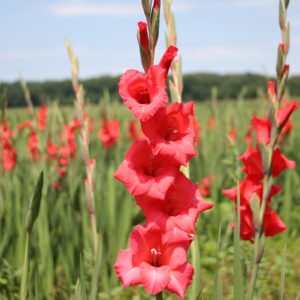
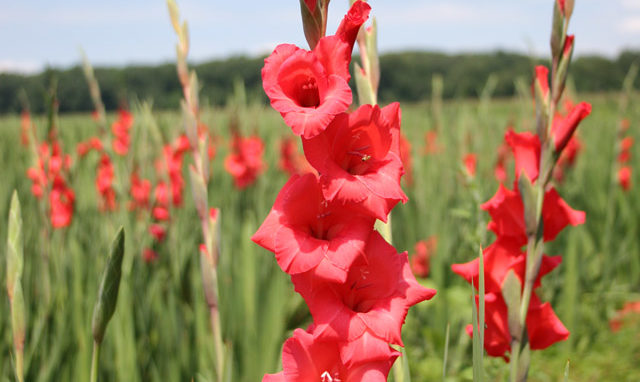
  • GladiolusGladiolus are very common in formal floral arrangements and are easy-to-grow, summer-blooming plants which are sold as corms. They are planted approx. 3-4″ below the ground’s surface (depending on the size of the bulb) in full sun areas. They will begin to grow and bloom the first year in late summer. Gladiolus are hardy in Zones 8-10 and Zone 7 with winter protection. Gladiolus can also be grown in northern zones up to Zone 4 if they are treated as annuals or dug for overwintering in the fall.

    Gladiolus are commonly used in cut flower arrangements for their great color and form.

    Gladiolus are commonly used in cut flower arrangements for their great color and form.

  • Asiatic/Oriental LiliesAsiatic and Oriental Lilies are wonderful additions to any cut flower garden and are extremely easy to grow. Sold as a bulb, these lily bulbs should be planted approx. 6-8″ below the ground’s surface (depending on the size of the bulb) in full sun area. They will begin to grow and bloom the first year in mid summer. Asiatic and Oriental Lilies are both winter hardy and therefore can be grown in Zones 3-9 with no fear of winter weather.

So don’t feel like it’s too late to try your green, or not so green, thumb at planting some bulbs! Come summertime, you’ll be very glad you did!

Until next time,

grcbb_signature1

Have a question for Bridget about spring planted bulbs? Send your question to bridget@bulbblog.com! If Bridget features your question on the Bulb Blog, you’ll recieve a $5.00 coupon for your next order at www.hollandbulbfarms.com!


begonias-050

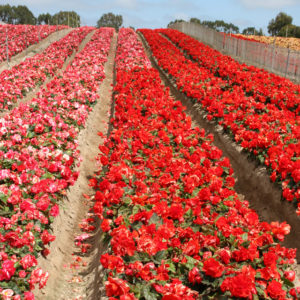
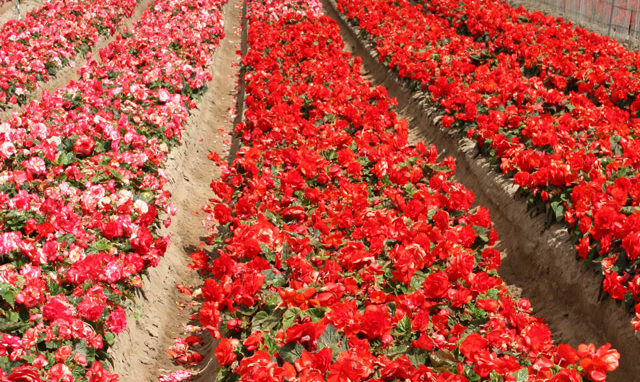
Some of the growers' fields which provide many of the begonias Holland Bulb Farms sells.

Tired of Winter? Start Spring Early with Indoor Forcing!

So the cookies have all been eaten, the Christmas tree is at the curb, and the stockings are no longer hung. Yet even though the holidays are over, the winter “duldrums” are plentiful: you’re still zipping up your bulky coat before leaving the house, you barely make it home before the sun has set, and your shovel hasn’t seen much of a break. So what now?

It is easy at this time of year to feel somewhat hopeless about the outdoors and wish that you could hibernate like the bears do. So why not start your gardening early? Most summer-blooming bulbs are great for forcing indoors, even before the ground has thawed! Not only will starting your plants indoors boost your mood and add some color to the bleak winter, but it will also give your plants a head start for the summer season. Come springtime, you’ll have the most vigorous plants in the neighborhood!

Starting Begonias Indoors

Today, I figured I’d explain the steps to starting your begonias indoors for fuller, more vigorous growth. Begonias are a great bulb to experiment with if this is your first shot at forcing since they are one of the most successful to begin indoors. Begonias also tend to be quite popular, due to their brilliant colors and ability to grow in shady areas (not to mention the namesake of my four-legged gardening buddy :) ) . Simply perform the following steps and you’ll be well on your way to having gorgeous begonias!

White double begonias in the grower's greenhouse.

White double begonias in the grower's greenhouse.

ITEMS YOU WILL NEED:

  • Begonia tubers
  • Well-drained soil
  • Seed trays or small pots
  • Paper or plastic wrap
  • General plant fertilizer
  • Water

WHAT TO DO:

  1. Fill the seed trays or small pots with soil.
  2. In late February or March, plant the tubers (hollow side up) just below the soil level. Soil should be somewhat moist.
  3. Cover with paper or plastic wrap and place on a window sill or other location with indirect maximum light. Temperature should not fall below 60°F.
  4. Water sparingly until growth begins (may take up to 5-6 weeks to see growth above ground although roots have started).
  5. Once shoots emerge from the soil, remove paper or plastic wrap and begin watering regularly. An application of a good liquid plant food will improve growth.
  6. Once substantial growth has formed and leaves have begun to appear, transplant plants to outside container or garden.

It’s that simple! When picking a location outdoors for your begonias, remember that they thrive in semi-shade so avoid areas which receive direct midday sun. Begonias also dislike dry conditions, so be sure to water generously, especially during periods of hot weather. As with most plants, an application of well-balanced plant food every two to three weeks will encourage healthy, vigorous growth. Just remove dead, wilted leaves and flowers and you’ll have begonia blooms all summer!

The new 'Sunrise' Scentiment Begonia!

One more quick note: People are always asking me about where to purchase the newly developed fragrant begonias. One of the only places I have found them is at www.hollandbulbfarms.com. These are referred to as Scentiment® Begonias and grow with a fresh, lemony scent!

Help yourself out this year by bringing spring into your home early! And say goodbye to the winter duldrums! Good luck!

Until next time,

grcbb_signature

Like this article? Want to learn more about indoor forcing other types of bulbs? Email Bridget at bridget@bulbblog.com!