Fall Bulbs


What’s all this about Spring Planted Bulbs???

When you think of “flower bulbs” what comes to mind? If you’re like most people, you immediate picture fields of tulips and daffodils, or maybe groupings of hyacinth. While this idea of bulbs is definitely a correct one, it is also somewhat limited. Did you realize that there are actually two planting seasons for bulbs? These planting seasons are classified as “fall planted” and “spring planted” bulbs.

Fall bulbs are extremely popular and add great color to the spring garden!

Fall planted bulbs, as I mentioned earlier, are definitely the more well-known bulbs in the group. These include your allium, crocus, daffodils, fritillaria, hyacinth, iris, muscari (grape hyacinth), scilla, and of course, the tulips. These bulbs are typically planted sometime between mid-September and mid-December, depending on  your hardiness zone and then bloom the following spring. Many of these bulbs actually require a chilling period (the winter season) in order to bloom and grow correctly. Therefore, gardeners who live in Zones 2 through 7b/8 can grow these without any special care and leave the bulbs in the ground year round. On the other hand, gardeners who live in warmer climates (Zones 8 through 11) and don’t receive this chilling period naturally outdoors, need to provide these bulbs with the cool period artificially, such as in a refrigerator prior to planting every year.

Dahlias are just one of the many amazing spring planted bulbs that can add great color to your late summer and early fall garden.

Spring planted bulbs are somewhat less well-known in the “bulb world” but are just as valuable to the landscape! These bulbs include anemone, begonias, calla lilies, canna lilies, dahlias, elephant ears, gladiolus, oriental and asiatic lilies, and herbaceous perennials. These bulbs are best planted between early March and late May, again depending on the hardiness zone in which you are located and then bloom in the summer and/or fall. Many of these bulbs (with the exception of oriental/asiatic lilies as well as herbaceous perennials) are not frost hardy and therefore need protection or special care during the winter in Zones 2 through 7b/8. However, the gardeners in Zones 8 through 11 can leave most of these bulbs in the ground year-round without the worry of frost damage.

Since the spring planted bulbs are often overlooked but yet have oh-so-much to offer, I figured it might be good to review them. Over the next couple of weeks, I am going to lead you through the land of the spring planted bulbs. Each article will focus on a different type of spring planted (summer/fall blooming) bulbs, highlighting their great qualities as well as pointing out any maintenance tips that may be important. So follow me on this wonderful journey and open your eyes to this wonderful world of spring planted bulbs!

Until next time,

Have a question about when to plant a certain type of bulb or any other bulb gardening topic? Ask Bridget! Email her at bridget@bulbblog.com! If she features your question in a future post, you’ll receive a Holland Bulb Farms coupon for your next order at Holland Bulb Farms!

Iris: The Apple of my Gardening Eye

An old-time favorite but still a very frequently used perennial, the Iris is truly timeless. Whether it be a the romantic, frilly Beardeds or the more modern, chic Dutch Iris, both add elements to the garden which are unmatched among other perennials. August is often referred to as “Bearded Iris Month” simply because bearded iris like to be planted in late August or early in September for best results. Today I thought I’d just give a general overview of both for those readers who may be slightly unfamiliar with the difference or maybe just wanted their memory refreshed.

Bearded Iris

Typically sold as “rhizomes”, Bearded Iris (or sometimes called German Iris) are the elegant queens of the late spring

This Red at Night Bearded Iris is one of the most popular!

This Red at Night Bearded Iris is one of the most popular!

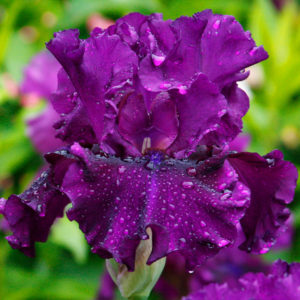
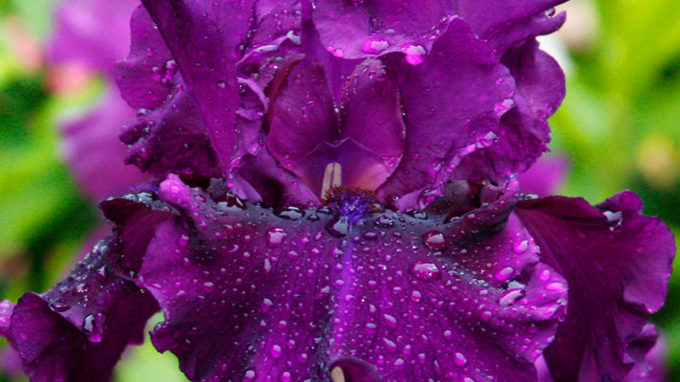
garden. The rhizomes are planted just below the soils surface, with little to almost no soil cover. The roots grow out of the bottom of this rhizome, creating a solid foundation for which the plant to grow. These Bearded Iris typically produce blooms made up of standards (the petals which stand upright) and falls (the petals which point downwards). The falls are covered with a soft “fuzz”, creating the beard which gives the iris its name! These rhizomes are best planted during the fall season but be sure to give them plenty of time to become established prior to any frost. They are great naturalizers (meaning they multiply quickly) and are reliably perennial. If you’re interested in more than a one time bloom, check out some of the Reblooming Bearded Iris!

Dutch Iris

Dutch Iris, although similar to Bearded Iris in bloom shape, have many of

This Orental Beauty Dutch Iris boast of bi-colored blooms of yellow and lavendar.

This Orental Beauty Dutch Iris boast of bi-colored blooms of yellow and lavendar.

their own characteristics which make them highly sought after. Their extremely narrow, long leaves make elegant additions to cut flower arrangements and the blooms tend to last an extremely long time making them a florists’ favorite! Dutch Iris come in a variety of blues, yellows, purples, and white. If you’re looking for a more unique, later spring-blooming boarded plant, try some of the dwarf varieties like the Cantab or  the Danford Dwarf Dutch Iris!

So do yourself a favor this year and plan for fresh cutflowers out of your own garden next spring! Plant Iris SOON! And if you need some help choosing, try checking out some great Bearded Iris Collections!

Until next time,

grcbb_signature

Have a question about iris or any other bulb gardening topic? Ask Bridget! Email her at bridget@bulbblog.com! If she features your question in a future post, you’ll receive a Holland Bulb Farms coupon for your next order with Holland Bulb Farms!

My Favorite Spring Things

Spring has almost come and gone in what seems like the blink of an eye! Now that the season is drawing to a close, I thought it might be a good time to review some of my “garden favorites” for all of the blog readers out there. After all, it’s never too early to start planning your spring garden for next year, considering these bulbs will need to get in the ground shortly after the summer is over!

The blooms of the 'Drumstick' Allium.

Drumstick Allium (Allium sphaerocephalum ‘Drumstick’)

These late spring bloomers are truly versatile! They produce 1-1/2″ diameter spherical blooms atop 24″ flower stems which age from green to a brilliant burgundy color. Plant them among a lower plant and watch them “hover” above. They look amazing in fresh flower arrangements and dry perfectly. They’re also deer resistant!

A single bloom of the 'Minnow' Daffodil.

Minnow Daffodil  (Narcissus tazetta ‘Minnow’)

This dwarf rock garden daffodil could hardly be any sweeter in its demeanor–or its scent! This little one only reaches 6″ tall and produces a beautiful fragrance which can fill your entire landscape when used in mass plantings. This has definitely become a mainstay for me in my mid-spring garden borders as well as my bud vases located around my house! Also won’t be eaten by deer, squirrels, or other pesky outdoor creatures…

Hyacinth

Jan Bos Hyacinth (Hyacinth orientalis ‘Jan Bos’)

Everyone’s familiar with the wonderful fragrance, long bloom time, and full dense flowers of the hyacinth, but have you ever seen one this color? A photograph hardly does this gem justice with its absolutely striking hue of deep magenta. Growing 12-16″ tall, this is a great “mid-height” plant to fill between a short border and dramatic tall background. And don’t forget: the rodents and deer won’t bother these!

Muscari

Bicolor Grape Hyacinth (Muscari latifolium)

What a fun new take on an old classic! This grape hyacinth is like no other with its “two-shade” bloom! The deeper violet contrasts nicely with the lighter blue while still retaining the familiar form and scent of the original. Use these little beauties in the border, in between other spring bloomers for added interest, or take advantage of their strong desire to naturalize and plant them among your lawn!

Tulip

Lambada Fringed Tulip (Tulipa ‘Lambada’)

Perhaps the most impressive bulb I grew this year was this one: the Lambada Fringed Tulip. Never was I astounded by a tulip as I was by this one! The outer light peach colored petals transition to a brilliant tangerine orange-yellow at the fringed edges! This late spring bloomer will create a marvelous end to the season and make you think of the warm summer days ahead!

This is just a sampling of what I fell in love with this year in my garden. Check these all out by clicking on the photographs and start planning your fall garden TODAY! I can guarantee you, these great selections won’t last long!

Until next time,

grcbb_signature

Have a question about which fall planted bulbs to plant in your garden or any other bulb gardening topic? Ask Bridget! Email her at bridget@bulbblog.com! If she features your question in a future post, you’ll receive a Holland Bulb Farms coupon for your next order with Holland Bulb Farms!


This 'F.M. Joyner' Caladium is a great spring planted bulb for a garden which gets large amounts of shade in the summer.
This ‘F.M. Joyner’ Caladium is a great spring planted bulb for a garden which gets large amounts of shade in the summer. 

Spring or Fall Bulbs: Who Says You Have to Choose?

“I had planted fall bulbs in a small garden area and now I am wondering if I am able to plant Spring bulbs in the same garden without hurting the daffodils, tulips, hyacinths, and crocus?”

~Paula

One of my readers, Paula, asked the above question in a recent email. And this is how I answered: ABSOLUTELY! Making use of the same garden space to plant both summer-/fall-blooming and spring-blooming bulbs is a great use of different plants for year round color! Planting dahlias and gladiolus next to daffodils and tulips is not only a good idea, it is a necessity for an “all bulb garden”. Here are three quick tips when planning a garden of this kind:

  1. Be sure you know where your previously planted bulbs are located, or be prepared to accidentally dig some up :) . The best course of action is to plant your fall planted bulbs FIRST, and then plant your spring planted bulbs while your spring bloomers are actively growing. This way you will know exactly where the other bulbs are planted. If this does not work for you, simply mark the plants with small popsicle sticks while they are growing. This will tell you approximately where not to dig when you go to plant your bulbs for the next season.
  2. If you do accidentally unearth a bulb which you did not intend to, simply re-plant it at the appropriate depth. Chances are, it will still come up at the correct time if the roots were not badly damaged.
  3. Consider the sunlight conditions in the designated area carefully when selecting your bulbs. Just because tulips (which like full sun) do well in your flowerbed, does not necessarily mean that canna lilies (which also require full sun) will do well. Keep in mind that a place in your yard which receives full sun in the early spring time, may not receive this much sun once all of the trees have leafed out. In some cases, you may need to select full sun bulbs for planting in the fall but ones which can withstand partial shade in the summer months (which are planted in the spring).

So go for it! Be daring and plant both types of bulbs in the same garden! I promise: they’ll get along just fine :) And congratulations to Paula for having her question featured in this post! She now has an extra $5.00 to spend on her spring planted bulbs from Holland Bulb Farms!

Spring is here!

Spring is here!

Until next time,

grcbb_signature1


Got a gardening question and need some help? Why not ask Bridget?! Send your question to bridget@bulbblog.com. If she features your question in a blog post, you’ll receive a coupon for $5.00 off your next order with Holland Bulb Farms!

Oh no! My bulbs are already sprouting! What do I do?

“My daffodils are starting to come up…the problem is that it is starting to snow a bit. Should I cover up the green that has started to sprout? I don’t want them to die!”

~Tammy from Cincinnati, Ohio


Crocus are a very early spring blooming bulb and often come up while the snow is still on the ground!

Does this sound familiar? At the middle to end of winter, we all hope for those warmer days with bright sunshine. But what about when those days come in the middle of January or February before the spring is really here? Oftentimes, these “touches of spring” can cause premature sprouting of bulbs. The growth starts showing itself above the ground, giving us hope of warmer days to come, only to be smothered with snowflakes a week later. So what is the best plan of action in a situation like this?

Well, my first piece of advice is simple: do not worry too much. If your bulbs are starting to come up early, they are simply reacting to the weather around them, which is out of your control. Think about it this way: if these bulbs where growing in the wild (as they originally did), they would experience this same thing from time to time and would still flourish without the intervention of any human. A little bit of foliage growth during freezing temperatures is not a big deal for these bulbs and should not affect their flowering in the months to come. If this happens in the wintertime, chances are that more cold weather is on its way. In this environment, the foliage will yellow and die back, returning the bulb to its “dormancy” period. This is completely normal and should just be allowed to happen.

Now if the weather continues to stay unseasonably warm, there is a slight chance that the bulbs may begin to produce flower buds. If this happens, your intervention may be necessary in order to protect these buds. Simply find some dry leaves, straw, or even sawdust to cover the sprouting plants and buds. Once the weather begins to warm and the threat of frost is gone, uncover the plants and allow them to continue to grow as normal. If the frost does happen to get to these flower buds, those flower buds will be damaged for the current season. However, this does not necessarily mean that the bulb will not produce additional flower buds at the proper time and then bloom as it normally should. Also, this one-time “frosting” will not have any adverse affect on the bulb’s performance in the years to come.

One more quick thing to keep in mind: sometimes bulbs sprout prematurely simply because the weather is unseasonably warm. However, sometimes there are factors we as gardeners create which can cause this premature sprouting. These factors are planting time and planting depth. Be sure that you wait until the weather is cool enough (consistently in the 40’s at night) in the fall to plant your spring blooming bulbs. Use the thermometer as your gauge and not just the calendar…as we all know, weather can be unpredictable and does not always turn cool at the same time every year. Planting your bulbs too early can cause them to then sprout too early. Also, keep in mind that most bulbs should be planted three times their height in depth. For example, if the bulb you are planting is approximately 2″ tall, then the top of this bulb should be covered with approximately 6″ of soil. Planting bulbs too shallow can cause premature growth as well.

Bulbs tend to take care of themselves...sit back and enjoy them!

Bulbs tend to take care of themselves...sit back and enjoy them!

Hopefully this article will calm some of your fears regarding your eager spring blooming bulbs! The most important thing to remember is that in most cases, nature can take care of itself. As long as your bulbs are planted correctly, your spring garden will be absolutely beautiful!

Until next time,

grcbb_signature1


Have a question for Bridget? Email her at bridget@bulbblog.comIf Bridget features your question in a blog post, you’ll receive a $5.00 coupon from one of our sponsors Holland Bulb Farms! Congratulations to Tammy for receiving her coupon!


HELP! I ran out of time to plant my fall bulbs! Now what?

“I know you’re not supposed to plant fall bulbs in the spring but we were hit with hard winter weather rather early this year and I am left with at least 100 tulip and daffodil bulbs that were unable to get planted. Would they survive to bloom next year if I were to plant them now?”

~Dianne from Idaho

Dianne asks a very good question…and one I’ve heard quite often! We all know what it’s like to have the greatest plans for our yard that never seem to quite materialize. Sometimes you even get so motivated that you actually purchase the bulbs and yet they still never make it in the ground! Whether it’s a forgetful mind, the unpredictability of Mother Nature, or just plain running out of time, it’s okay: we’ve ALL done it. And the best news? It may not be too late for your bulbs!

These bulbs were bought with good intentions...anything you can do with them now?

These bulbs were bought with good intentions...anything you can do with them now?

The most important factor to consider when deciding what to do with fall bulbs which were never planted in fall is the conditions in which they have been stored. Were they kept in a cool, dry place since you bought them? Were they left out in the garage? Were they left on the warm kitchen table? Test your bulbs for firmness by squeezing them. Also look for signs of rot or blight by checking the outside of the bulbs for dark or mushy spots. If the bulbs feel firm and have a rather healthy-looking outside, then you’ve got yourself some winners! Most likely, if the bulb was left outside or in a very cold garage and was allowed to freeze, it is no longer salvageable.

So now that you’ve determined that your bulbs are still healthy enough to survive, it’s time to get them “chilled.” As you may or may not know, most fall bulbs (tulips, daffodils, and hyacinth to be specific) need to be chilled in order to grow and bloom properly in the springtime. When planting them in northern climates which receive consistently cool weather in the winter (Zones 3-8), this happens naturally. However, since your bulbs were not planted before the winter and now the ground is frozen, the bulbs can no longer be planted in the ground this year. This leaves you with two options:

  1. Plant the bulbs in one large (or a few small) pots. Plant them at the correct depth but don’t worry too
    These 'Queen of Night' Tulips need to be chilled in order to grow and bloom correctly.

    These 'Queen of Night' Tulips need to be chilled in order to grow and bloom correctly.

    much about the spacing. As long as the bulbs aren’t on top of one another or smashed side-by-side, they’ll be fine. Place this pot in a cool but not freezing garage (upper 30’s and 40’s for temperature). If you do not have a garage or shed which meets this criteria, the pot can be left outside on a patio or deck as long as it is wrapped in something which will protect it from frost (such as burlap or bubble wrap). The bulbs will then receive their necessary “chilling” period but will not freeze. In approximately 10 to 12 weeks or so, you should start to see a little growth. Once this happens, move the pot to a nice sunny patio or lawn area (or remove the bubble warp). The bulbs will continue to grow and bloom just as they would in the ground. The bulbs can then be dug out of the pot and moved to a flowerbed either during their growing cycle or after the foliage has browned and dried. OR…

  2. Place the bulbs in a paper bag in the refrigerator. Be sure that the refrigerator is set at a temperature between 35°F and 50°F. Also, rid the refrigerator of any fruit (particularly apples) as these produce a plant hormone called “ethylene” when ripening which will cause flower bulbs to rot. After a period of 10-12 weeks, the bulbs may start to sprout. At this time, the ground outside should be thawed and the bulbs planted in the ground. They will then grow and bloom as normal!

One important thing to keep in mind when doing this is that the environment required by these bulbs is being artificially created. Therefore, be forgiving of your bulbs and do not expect them to be super all-star growers and bloomers the first year. It may take them a little while to readjust but after they have completed their first full growing season, you’ll never be able to tell the difference!

Because Dianne’s question was featured in the Bulb Blog, she received a $5.00 off coupon for her next Holland Bulb Farms order. Congratulations to her and thank you for the great question! Keep them coming and you may get a coupon, too!

Until next time,

grcbb_signature1

Got a gardening question for Bridget? Email her at bridget@bulbblog.com! If she features your question in a post, you’ll receive a coupon of your next order at www.hollandbulbfarms.com!

Next Page »