


Crazy for Caladiums!

One of the best bulbs for shaded areas, but unfortunately also one of the most over-looked is the Caladium. Grown primarily for their foliage, these larger-leaved plants will add color to the shaded areas of a landscape all season long with their colorful leaves. A close relative of the sun-loving Elephant Ear, Caladiums grow much shorter, often topping out at 20″ tall, these plants make great borders or accents between shade-loving perennials.

Classification

This F.M. Joyner Caladium will be sure to add delight to the shaded areas of your garden!

Caladiums are commonly categorized into two groups, based on their leaf morphology: Fancy Leaf and Strap Leaf varieties. Fancy leaf caladiums are the more common of the two and have broad heart-shaped or almost arrowhead-shaped leaves. They also generally grow a bit taller than the Strap Leaf type. The Strap Leaf generally have a more pointed, narrow, heart-shaped leave shape and produce a more compact plant.

Growing Caladiums

Again, one of the best plants for shade but also one of the most over-looked bulbs, caladiums definitely deserve a spot in your garden. Their colorful foliage and perfect height make them a “must-have” for the darker areas of the landscape and add a great texture !

Until next time,

Have a question about caladiums or any other bulb gardening topic? Ask Bridget! Email her at bridget@bulbblog.com! If she features your question in a future post, you’ll receive a Holland Bulb Farms coupon for your next order at Holland Bulb Farms!

Share and Enjoy:
  • Digg
  • Sphinn
  • del.icio.us
  • Facebook
  • Mixx
  • Google Bookmarks

Lovely Lilies!

The next type of spring-planted bulb that we are going to focus on is the Lilies. Perhaps one of the most well-known bulbs and one of the world’s best cutflowers, both Oriental and Asiatic Lilies are known for their spectacular color displays as well as their often intense, sweet fragrance. In this article, we’ll review the advantages of using these beauties in your garden, as well as different planting techniques and tips for growing them.

These Oriental Lilies are a good example of the form and coloration of many of these types of lilies.

Classification

As I mentioned, lilies are often remembered for their pleasant fragrance and their wonderful cutting ability. This can be said about both of the main classifications of lilies, Asiatics and Orientals, although Asiatics will not have as noticeable as a scent. Asiatic Lilies tend to bloom with more solid, bold colors and often have a bit smaller flower than the Orientals. They also bloom earlier than the Oriental Lilies, often one of the first in the summer blooming bulbs category in June to early July. The slightly shorter but more slender stature, as well as the ruffled edges to their petals make the Asiatic Lilies easy to identify. As for the Oriental Lilies, the flowers of these lilies are often speckled and bear multiple colors which fade in and out of the center.  Oriental Lilies also bloom slightly later than the Asiatics, often in mid-July to early-August.

Growing Lilies

Both Asiatic and Oriental Lilies are sold as bulbs and often still bear some of last year’s roots on them when purchased. The end opposite the roots will have a slight point to it, which should be pointed “upwards” when planted in the ground. When selecting lily bulbs, be sure to test them for firmness, as any time of freezing of the bulb during transport will make it soft and not usable. Both Asiatic and Oriental Lilies prefer full to partial shade, but are not extremely tolerant of direct sunlight which causes extreme heat. They are hardy in Zones 3 to 8b/9a and can be grown in warmer zones when protected from the sun and heat and given adequate amounts of water. In fact, one of the greatest characteristics about lilies is that they will perennialize even in zones that receive harsh winters! This unfortunately cannot be said for many of the spring-planting bulbs.

These Asiatic Lilies are just one example of the bold colors and exquisite form of these beauties of the summer garden!

Once you have selected a partially shaded to full sun location, be sure the soil is well-drained. If the soil in this area tends to be heavy or contain large amounts of clay, these bulbs will definitely benefit from amending the soil with organic materials such as peat moss and compost manure. If the bulbs are allowed to sit too wet, they will surely rot and turn to mush. Plant the bulbs pointed-side up approximately 4-6″ below the surface of the ground and water well. These bulbs should not need much supplemental watering from you unless a long drought period is experienced. Again, these  bulbs are winter hardy and therefore can be left in the ground year round to come back year after year!

Both Asiatic and Oriental Lilies can also be grown in containers. When planting them in planters or pots, the same general rules of thumb apply. Place the pot in a partial to full sun location, be sure that the soil it contains is well-drained, and plant 4-6″ below the surface of the soil. One thing to keep in mind if you live in a cooler climate (Zones 7 or above): While these bulbs require the cool temperatures of the winter, allowing them to freeze while being exposed in an above-ground container is not advisable. To protect these bulbs from this severe freezing, either move the container into a cool garage, basement, or cellar, or wrap it in a quilt or a good amount of burlap. Once the weather begins to warm in the springtime, either move the container to the outdoors or unwrap the planter.

One of the best-loved and definitely the most fragrant of the summer blooming bulbs, the characteristics of the lily bulbs make then something you definitely won’t want to leave out of your garden. Easy to grow and wonderful for fresh cut arrangements, these bulbs will become one of your favorite of the garden and will come back year after year for you to enjoy!

Until next time,

Have a question about lilies or any other bulb gardening topic? Ask Bridget! Email her at bridget@bulbblog.com! If she features your question in a future post, you’ll receive a Holland Bulb Farms coupon for your next order at Holland Bulb Farms!

Share and Enjoy:
  • Digg
  • Sphinn
  • del.icio.us
  • Facebook
  • Mixx
  • Google Bookmarks

Brilliant Begonias!

The next type of spring-planted bulbs we’re going to focus on is the Tuberous Begonia. Known for their wonderful ability to grow in the shade, small habit and lush green foliage, these tubers make great addition to shady gardens and borders. In this article, we’ll review the advantages of using these beauties in your garden, as well as different planting techniques and tips for growing them.

Classification

Begonias work wonderfully along walkways and as borders to other shaded gardens.

Tuberous Begonias can typically be grouped into three types: Begonia tuberhybridia, Begonia multiflora, and Begonia pendula. The Begonia tuberhybridia types are the most commonly grown and well-known and include the Double Begonias, Ruffled Begonias, Roseform Begonias, and Picotee Begonias. The Begonia multiflora variety include the Multiple Flowering varieties with smaller, numerous blooms. The Begonia pendula are the Hanging Basket-type of begonias which trail over the edges of planters and pots. Oftentimes, the novice gardener will confuse these tuberous begonias with wax begonias, which are grown more as an annual or indoor plants and not from a tuber (or bulb).

Tubers for all three types of these begonias are typically available for purchase in late winter/early spring. They look like small brown lumps with a depression on one side. When choosing the tubers, be sure to check for firmness and look for those with tiny sprouts on the upper, concave surfaces. This is a good sign that they are healthy and ready to begin growing!

Growing Begonias

As previously mentioned, Begonias should be planted during the spring season, anytime after the threat of frost is gone but before the weather gets too warm. For most of the United States, this time period falls between mid-March and mid-May. Maybe begonia growers located in cooler climates, choose to start their begonias early (middle to end of February) indoors to give them a head start on the growing season. Many bulb companies will over this “early delivery” as on option on this partcular type of spring-planted bulb. (For more detailed information on just how to go about starting these tubers indoors, be sure to check out last year’s blog article here: http://www.bulbblog.com/start-begonias-indoors/)

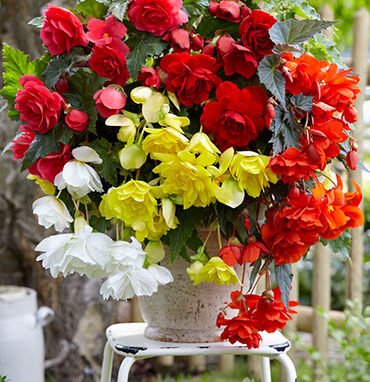
This beauty if the Sunrise Scentiment Begonia. Not only is it easy on the eyes, but also smells wonderful!

This Sunrise Scentiment Begonia is of the "ruffled" type and is not only pleasing to look at, but also provides a wonderful fragrance!

Begonias will begin blooming mid-summer and will continue until frost! Begonias thrive in partial to full shade and need to be protected from hot sun and drying winds. The key to successfully growing begonias is to make sure the soild is well-drained. Begonia tubers are extremely susceptible to rot and therefore do not like any excess moisture. However, be sure to not let the soil dry out between waterings during the summer months. Fertilize once per month during the growing season with a water soluble fertilizer (such as Miracle-Grow).Always water the soil around the plants rather than the plants themselves whenever possible to avoid the forming of fungus or mildew on the foliage. The tubers should be planted hollow side up and covered with only 1/2 to 1″ of soil. Planting them too deep will only encourage rotting. Water well after planting to “wake up” the tubers but then not again until you see growth, which usually takes 4-6 weeks.

For aesthetic reasons, pink off extra long stems as the plants grow. This will encourage blooming and keep your plants from looking “leggy”. When growing the hanging basket-type, make sure they have lots of branches to cascade from their plants by pinching out the primary growing tip when the plant is 2″ tall. Also, deadhead your begonias often by removing wild=ted leaves and flowers. This will retain the “clean” look of the plants and will also encourage repeat blooming throughout the season.

Tuber Storage

Once the plants have completed their growing and blooming cycle, the leaves and flower stems will begin to die back as they enter their dormant stage. Begonias are hardy in Zones 8, 9, and 10. In these areas, simply cut the stems back to within 1-4″ of the soil surface once they have completely died back. Leave the tuber in the ground for the remaining fall and winter. If located in zones north of Zone 8 (Zones 1-7), you will need to take special care of the tubers in order to protect them from the harsh winter weather. Southern parts of Zone 7 can usually get away with giving the tubers a good drink of water in the fall and placing a think layer of mulch over the area where the tubers are planted. To be really sure, however, the tubers will need to be removed from the soil and overwintered indoors. To do so, follow these simple steps:

  1. Since begonia tubers tend to be susceptible to rot, it is often a good idea to bring them indoors just before the first frost. If grown in movable planters, bring the planters indoors and gradually begin with-holding water. Once the leaves begin to die and wilt, remove the stems and leaves carefully from the tubers.
  2. If your tubers are planted outside in the garden, simply dig them up (plant and bulb together) and bring them indoors prior to the first frost. The foliage will begin dying back quickly and can then be removed.
  3. Gently brush off any excess dirt from the tubers and place them in a tray or pot with dry sand, peat moss, or vermiculite.
  4. Store them in a cool, well-ventilated, frost-free area such as a cellar or garage over winter. A temperature of 45-55°F is ideal.
  5. Replant in the spring once ground has thawed!

Those who grow Begonia tubers are some of the most passionate gardeners on earth…and it’s easy to see why! Looking absolutely gorgeous with their bright, large blooms and lush green foliage, it’s hard to believe these plants don’t need much sunlight! Whether you’re a “begonia growing veteran” or have never tried them before, be sure to make your selections early this year and get them growing as soon as possible!

Until next time,

Have a question about begonias or any other bulb gardening topic? Ask Bridget! Email her at bridget@bulbblog.com! If she features your question in a future post, you’ll receive a Holland Bulb Farms coupon for your next order at Holland Bulb Farms!

Share and Enjoy:
  • Digg
  • Sphinn
  • del.icio.us
  • Facebook
  • Mixx
  • Google Bookmarks

Caught in a Dahlia Daydream!

The first type of spring-planted bulb we’re going to focus on is the Dahlia. Known for its vibrant colors and tightly-packed (often large) flower heads, the Dahlia is truly a wonder to behold in the summer garden. In this article, we’ll review the advantages of using these beauties in your garden, as well as different planting techniques and tips for growing them.

The brilliant colors of Dahlias make quite the statement along a pathway!

Classification

Dahlias come in a wide range of shapes, sizes, and colors. The two largest classification of dahlias refer to the petal arrangement. These classifications are single-flowering (typically grow less than 3′ in height and blooms tend to be less than 4″ in diameter) and double-flowering (typically grow in excess of 3′ in height and forms larger blooms). The single-flowering dahlias include the Impression, Single, Orchid-Flowering, and Collarett varieties and tend to be less popular. The double-flowering dahlias consist of the Cactus, Semi-Cactus, Decorative, Dinnerplate, Ball or Pompon, Border, and Novelty varieties. The terms “single-” or “double-”flowering does not refer to how many times the plant will bloom but rather to the bloom structure itself. The single-flowering varieties bloom with just a single row of petals where as the double-flowering will have multiple rows.

Planting Dahlias

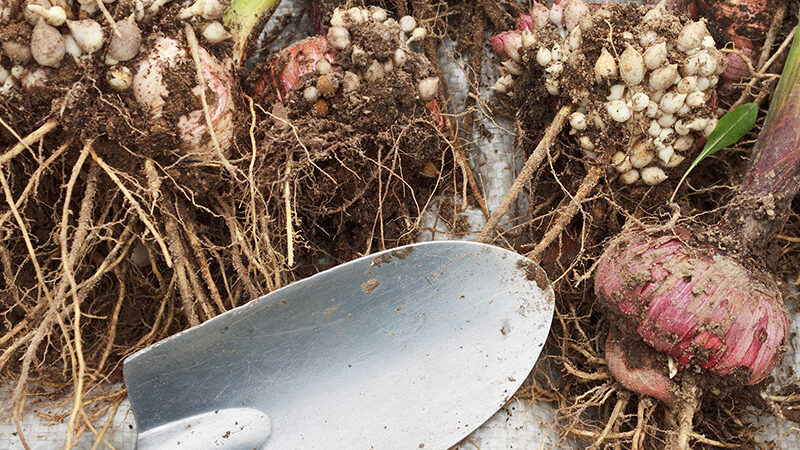
A typical dahlia tuber somewhat resembles a disfigured hand with "fingers".

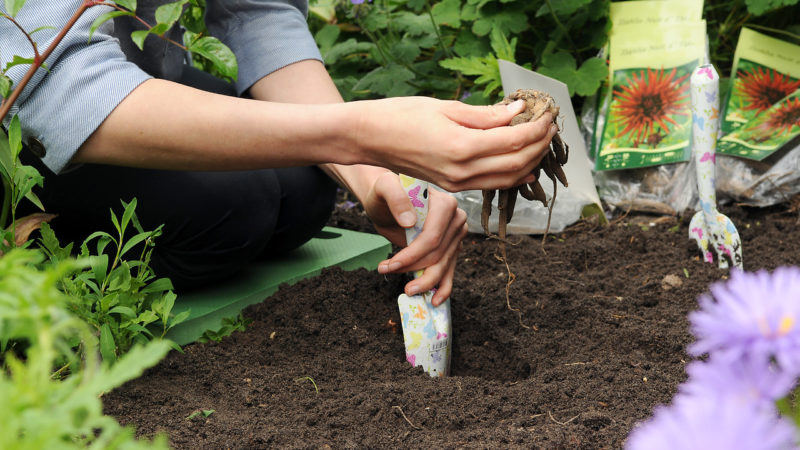
When purchased as bulbs, Dahlias are sold as “tubers”. These tubers often resemble somewhat of a disfigured hand with multiple “fingers” extending downward from the center. The center of this tuber is actually the crown of the stem from the previous year’s growth! When this dahlia begins to sprout after planting, you will be able to see small green shoot protruding from this center crown. Like most bulbs, Dahlias require a well-drained soil (a good mixture of organic material including peat moss and compost manure does wonders) with little clay content. Again, like most bulbs, the Dahlia tubers will surely rot if allowed to sit wet for long spans of time. Select a location that is quite sunny (receives at least 6 hours of sunlight per day) and protected from strong winds. The tubers should be planted “fingers down” in the soil, with the center of the tuber where the stem was the year before just at the soil surface. Depending on the size of the tuber and the specific dahlia variety, spacing should typically range from 18-36″ apart, leaving them enough room to spread and grow properly.

Growing Dahlias

As previously mentioned, Dahlias should be planted during the spring season, anytime after the threat of frost is gone but before the weather gets too warm. For most of the United States, this time period falls between mid-March and mid-May. Dahlias will

Dahlias come in a wide variety of colors and shapes.

begin blooming mid-summer and most will continue on in the late summer and sometimes early fall! Keep the soil moist but definitely not saturated during the summer months. Once the plants reach a foot or so in height, the terminal shoot (or center stem) of the plant can pinched back to encourage branching. For increased flower size, pinch back the lateral (side) flower buds to direct more energy and nutrients to the main flower bud at the end of the stem. Fertilize once per month during the growing season with a water soluble fertilizer (such as Miracle-Grow).

Tuber Storage

Once the plants have completed their growing and blooming cycle, the leaves and flower stems will begin to die back as they enter their dormant stage. Dahlias are hardy in Zones 8, 9, 10, and 11. In these areas, simply cut the stems back to with 1-4″ of the soil surface once they have completely died back. Leave the tuber in the ground for the remaining fall and winter. If located in zones north of Zone 8 (Zones 1-7), you will need to take special care of the tubers in order to protect them from the harsh winter weather. Southern parts of Zone 7 can usually get away with giving the tubers a good drink of water in the fall and placing a think layer of mulch over the area where the tubers are planted. To be really sure, however, the tubers will need to be removed from the soil and overwintered indoors. To do so, follow these simple steps:

  1. After the first frost, cut back the foliage and stems to within 1-4″ of the soil surface.
  2. Carefully dig out the dahlia tuber, being sure not to sever any of the “fingers”. In order to avoid this, begin by digging at least 12″ away from the center of the plant in all directions.
  3. Gently brush off any excess dirt from the tubers and spread them out in a shaded, well-ventilated area for several days. Do NOT leave the tubers in full sun.
  4. Pack the tubers upside down in a well-ventilated box, basket, or bag using slightly damp vermiculite, perlite or peat moss, covering the clumps of tubers.
  5. Store in temperatures of 35°F to 50°F and protect from hot or cold drafts.
  6. Replant in the spring once ground has thawed.

One of the longest summer blooming bulbs, the variety and vibrant colors of Dahlias are something you won’t want to leave out of your summer garden this year. Whether you’re a veteran gardener or just starting to get your hands dirty, these tubers are sure to please without much fuss. Looking great in the garden as well as in a large vase on your dining room table, try some this year and be the talk of the town!

Until next time,

Have a question about dahlias or any other bulb gardening topic? Ask Bridget! Email her at bridget@bulbblog.com! If she features your question in a future post, you’ll receive a Holland Bulb Farms coupon for your next order at Holland Bulb Farms!

Bridget Bulb | Create Your Badge

Share and Enjoy:
  • Digg
  • Sphinn
  • del.icio.us
  • Facebook
  • Mixx
  • Google Bookmarks

What’s all this about Spring Planted Bulbs???

When you think of “flower bulbs” what comes to mind? If you’re like most people, you immediate picture fields of tulips and daffodils, or maybe groupings of hyacinth. While this idea of bulbs is definitely a correct one, it is also somewhat limited. Did you realize that there are actually two planting seasons for bulbs? These planting seasons are classified as “fall planted” and “spring planted” bulbs.

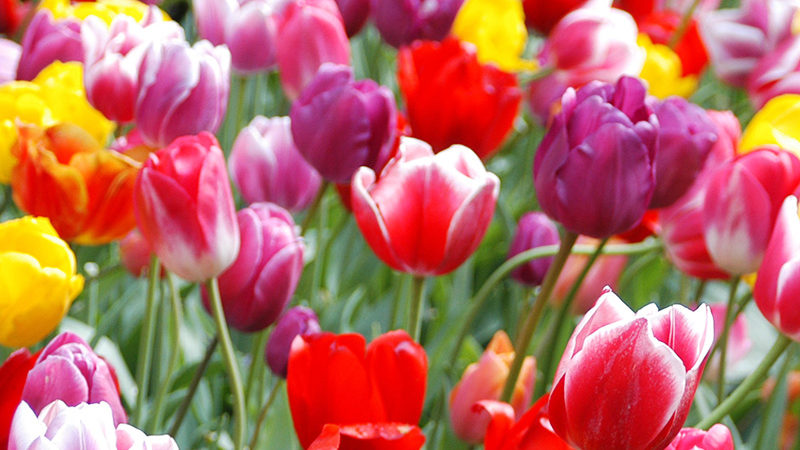
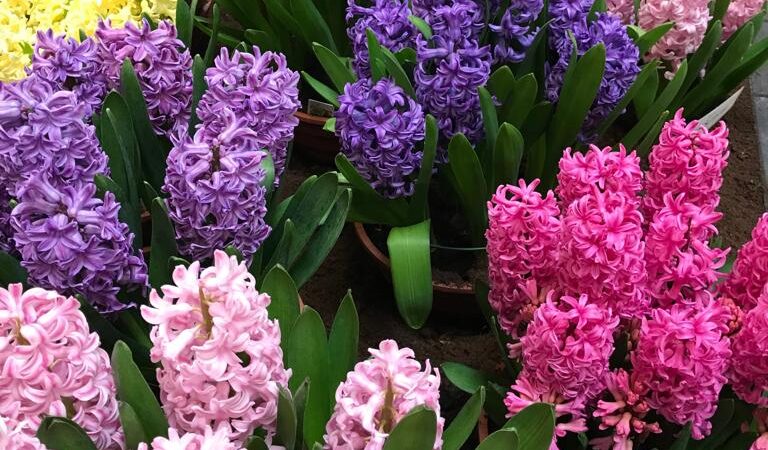
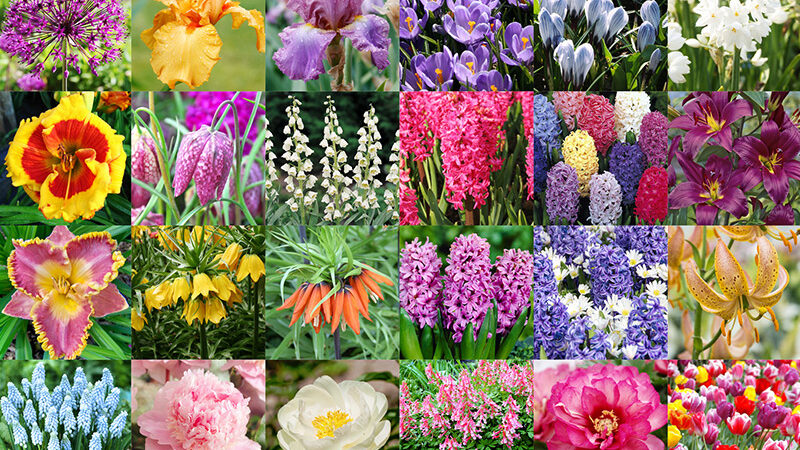
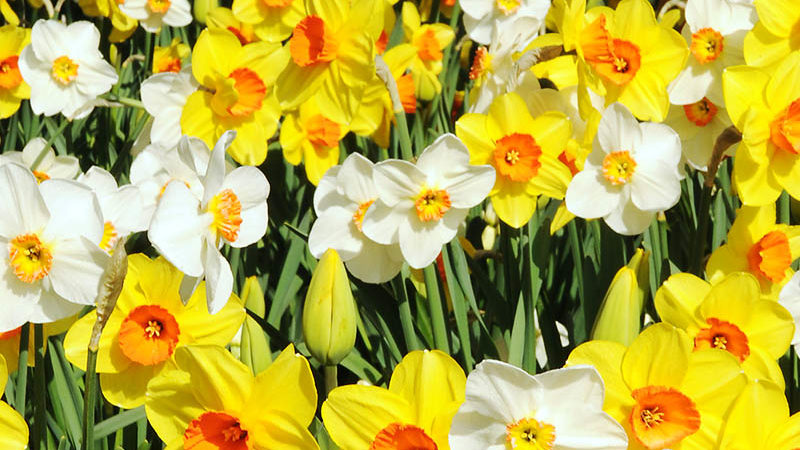
Fall bulbs are extremely popular and add great color to the spring garden!

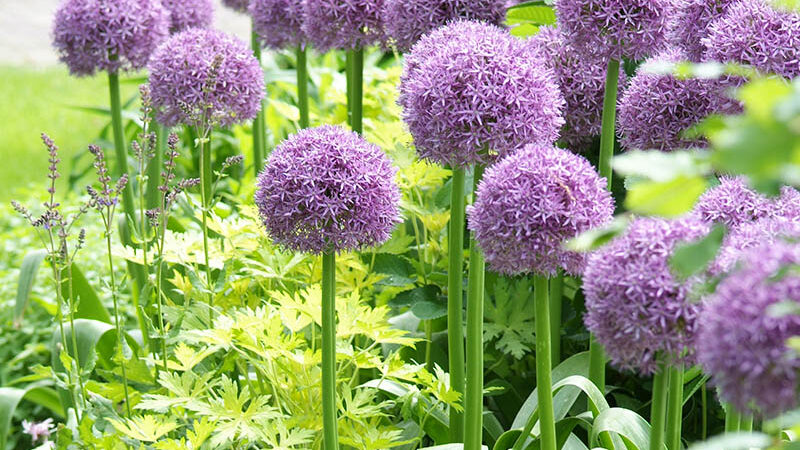
Fall planted bulbs, as I mentioned earlier, are definitely the more well-known bulbs in the group. These include your allium, crocus, daffodils, fritillaria, hyacinth, iris, muscari (grape hyacinth), scilla, and of course, the tulips. These bulbs are typically planted sometime between mid-September and mid-December, depending on  your hardiness zone and then bloom the following spring. Many of these bulbs actually require a chilling period (the winter season) in order to bloom and grow correctly. Therefore, gardeners who live in Zones 2 through 7b/8 can grow these without any special care and leave the bulbs in the ground year round. On the other hand, gardeners who live in warmer climates (Zones 8 through 11) and don’t receive this chilling period naturally outdoors, need to provide these bulbs with the cool period artificially, such as in a refrigerator prior to planting every year.

Dahlias are just one of the many amazing spring planted bulbs that can add great color to your late summer and early fall garden.

Spring planted bulbs are somewhat less well-known in the “bulb world” but are just as valuable to the landscape! These bulbs include anemone, begonias, calla lilies, canna lilies, dahlias, elephant ears, gladiolus, oriental and asiatic lilies, and herbaceous perennials. These bulbs are best planted between early March and late May, again depending on the hardiness zone in which you are located and then bloom in the summer and/or fall. Many of these bulbs (with the exception of oriental/asiatic lilies as well as herbaceous perennials) are not frost hardy and therefore need protection or special care during the winter in Zones 2 through 7b/8. However, the gardeners in Zones 8 through 11 can leave most of these bulbs in the ground year-round without the worry of frost damage.

Since the spring planted bulbs are often overlooked but yet have oh-so-much to offer, I figured it might be good to review them. Over the next couple of weeks, I am going to lead you through the land of the spring planted bulbs. Each article will focus on a different type of spring planted (summer/fall blooming) bulbs, highlighting their great qualities as well as pointing out any maintenance tips that may be important. So follow me on this wonderful journey and open your eyes to this wonderful world of spring planted bulbs!

Until next time,

Have a question about when to plant a certain type of bulb or any other bulb gardening topic? Ask Bridget! Email her at bridget@bulbblog.com! If she features your question in a future post, you’ll receive a Holland Bulb Farms coupon for your next order at Holland Bulb Farms!

Share and Enjoy:
  • Digg
  • Sphinn
  • del.icio.us
  • Facebook
  • Mixx
  • Google Bookmarks

Don't be a grump just because it's cold! Start your "summer dreaming" today!
Don’t be a grump just because it’s cold! Start your “summer dreaming” now!

Beat the Winter Duldrums: Start Planning your Summer Garden TODAY!

For those of us who live in “cold winter” areas, as Begonia and I do, right about now the snow is beginning to “lose its luster”. The holidays are over with nothing left to look forward to but another several months of wet boots, red noses, and frozen car doors. So why not bring the spring and summer INTO your home by starting your “summer dreaming” a little early this year?!

Did you realize that many online as well as catalog bulb and perennial companies have already started accepting pre-orders for spring planted items, such as cannas, callas, dahlias, and assorted perennials? You can be far ahead of the game just by beginning to plan now and making your selections before the spring rush begins.

So you may be wondering: how do I even begin to decide what I want to plant this year? Even though this may seem like a daunting task, planning your garden should be one of the most fun and enjoyable things you do! Make it easy on yourself this year by following these easy steps:

  1. Decide on a location. Pick a spot of your yard that you feel needs “extra attention”. Or perhaps for you it’s simply your favorite raised planter or decorative container. Have a specific project, such as a flowerbed around your mailbox or in that shaded part of your already existing garden? Perhaps this is the year you want to tackle it! Whatever you do, don’t “over-commit” yourself. Doing so will only leave you tired and frustrated. Have the courage to a pick a slightly smaller project and do it WELL rather than taking on more than you can handle and leaving yourself disappointed by the results.

    Let your imagination bring the warm weather to you!

    Let your imagination bring the warm weather to you even on the coldest day!

  2. Start collecting ideas. Collect all of the information you can find: garden magazines, website and blog articles, plant catalogs, and web addresses to some of your favorite plant sources. When you see something you like, tear it out or print it off and begin a “summer dreaming” journal. Try not to get too hung up on plant height, color, light requirements, etc. at first. These will only limit your creativity.
  3. Look through your treasures. Once you feel you have collected a good amount of information, sit down with your journal and sort through what you have found. Can you find any common themes in the plants/ideas you’ve selected (formal garden settings, color patterns, exotic-looking plants?). Begin to think about these ideas in relation to the location you had pre-determined to “fix-up” this year. Will they work here? Does the area get enough sunlight or too much? Do the colors go together or do they clash?
  4. Begin building the dream. Now that the information you have collected has been somewhat organized, decide which direction you will take and separate the plants/ideas that will be included this season. Do NOT throw the rest of it away! Keep all of these ideas in a folder to re-visit at a later time and don’t EVER tell yourself “no” to an idea you truly love. Yes, it may be true that you don’t have the money to have an 8 foot tall marble fountain in the middle of your backyard surrounded by 5′ cannas. But that doesn’t mean you can’t someday do something very similar, just on a smaller scale. Again, it may be true that you just don’t have enough sunlight in your backyard to grow the climbing wisteria vine  you’ve always dreamed of but that doesn’t mean that there aren’t other climbing perennials which would work wonderfully in a more shaded landscape and provide just the same effect.
  5. Go shopping! Join newsletters and email lists to your favorite websites and suppliers and begin watching for coupons. Start finding specific sources for your purchases and don’t wait too long to place your order. Once the weather starts to warm up, there will be many gardeners thinking about making these purchases and you won’t want to get left out in the cold :)

From now on, whenever the winter rain, sleet, or snow starts to get you down, head to your favorite garden website or magazine and continue your “summer dreaming”. It won’t be long before it’s here and you want to be ready for it, don’t you???

Until next time,

grcbb_signature

Have a question about your “summer dreaming” or any other bulb gardening topic? Ask Bridget! Email her at bridget@bulbblog.com! If she features your question in a future post, you’ll receive a Holland Bulb Farms coupon for your next order at Holland Bulb Farms!

Share and Enjoy:
  • Digg
  • Sphinn
  • del.icio.us
  • Facebook
  • Mixx
  • Google Bookmarks

Next Page »